Home / Affaires et Politique / Ban Jelačić a aboli le servage : les serfs et les esclaves existent-ils encore aujourd’hui ?

Ban Jelačić a aboli le servage : les serfs et les esclaves existent-ils encore aujourd’hui ?

<p>Ban Josip Jelačić</p>
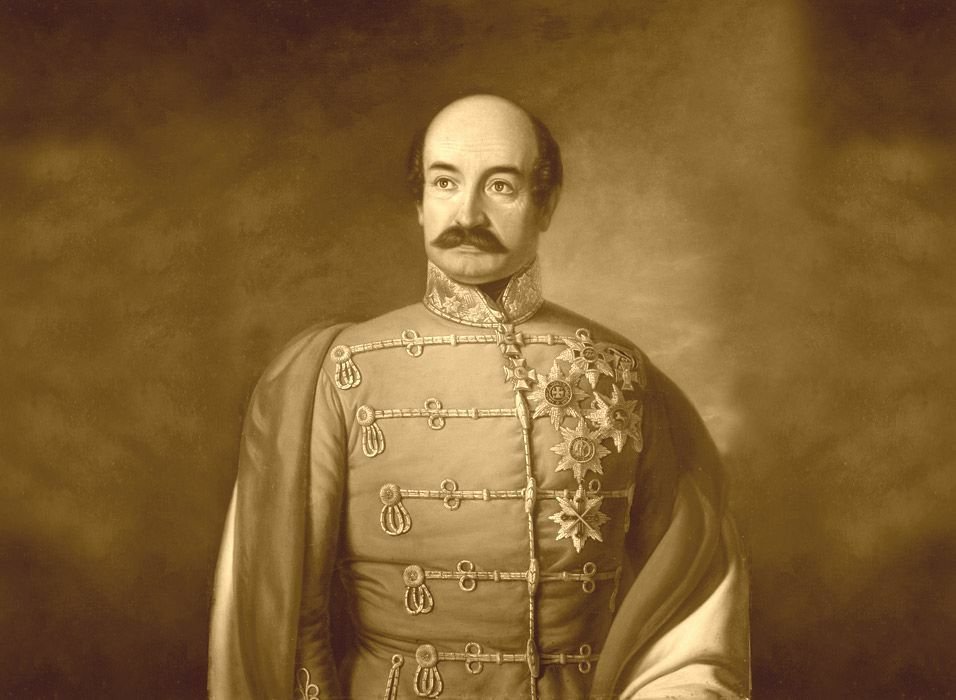
Ban Josip Jelačić / Image by: foto

Ban Josip Jelačić 25. travnja 1848. announced the Proclamation on the abolition of serfdom, a document that freed Croatian peasants from burdens, dues, and church tithes, and the feudal system finally ceased to exist in Croatia. The Croatian Parliament confirmed this decision on June 7, 1848.

This opened the transition from feudal to capitalist relations, which – with a communist interruption during the period 1945–1990 – would shape Croatian society up to the present day.

The abolition of serfdom was a political act of enormous weight, not only socially but also nationally.

‘Spring of Nations’ 1848.

In 1848, Europe was ablaze with revolutions during the ‘Spring of Nations’. The populist Jelačić was appointed Croatian ban on March 23. The People’s Party already presented a 30-point program (‘People’s Demands’) on March 25, and the abolition of serfdom was one of the key demands.

Just a month later, the new ban Jelačić signed the historic proclamation that freed the peasants.

In Croatian historiography, April 25 is recorded as the day of the abolition of serfdom, although it was not the beginning of the process but its final, decisive step.

Rebellion of the Croatian nobility

Emperor Joseph II, in the second half of the 18th century, in the spirit of enlightened absolutism, attempted to reform feudalism. With the Patent on the Free Movement of Serfs in 1785, he abolished the personal dependence of peasants on feudal lords and allowed them free disposal of their movable property and education.

As the Croatian and Hungarian nobility did not accept this reform, the emperor abolished Croatian and Hungarian counties that same year and divided Croatia into the Zagreb and Pečuh districts, which caused new tensions and rebellions.

However, Joseph’s reforms did not touch the foundation of the feudal system: burdens, tithes, dues, and the estate order. These economic unfreedoms were only abolished by Jelačić. Therefore, the real abolition of serfdom is associated with 1848, when feudal obligations and serf relations in Croatia were finally and legally abolished.

The proclamation that changed history

Thus, 1848 is considered the true abolition of serfdom. This move changed Croatian history and had enormous significance for the development of Croatia:

  • Political independence

– Croatia was able for the first time to conduct its own social policy, separate from Hungarian interests.

  • The beginning of civil society

– After a century of estate order, all residents became legal entities, not someone’s ‘belonging’.


  • The beginning of a modern economy

– Free peasants could dispose of their labor, enter into contracts, and enter the market.

  • Reduction of social tension

– In a number of European countries in 1848, there were bloody peasant uprisings — Croatia did not have them precisely because of such a move by Jelačić.

Today’s parallels with serfdom

And today? Do ‘new serfdoms’ exist? Of course, there is no formal serfdom or slavery — it is legally prohibited and punishable. But there are modern forms of economic and social vulnerability that sometimes bear the characteristics of coercion, dependency, or exploitation.

We can talk about social patterns that carry similar characteristics, only in modern forms. Here are where parallels can be drawn:

  • Long-term over-indebtedness and enforcement system

– Some citizens have lived under blockades for years, with limited ability to dispose of their income — sociologists call this ‘debtor feudalism’.

  • Poor quality forms of work (seasonal work, false contracts, platform work)

– People nominally free, but actually in complete economic dependency.

  • Migrant workers in agriculture, tourism, or construction

– Some work in conditions that occasionally have the characteristics of severe exploitation — but this is not slavery, rather illegal exploitation, which criminal law treats as human trafficking.

  • Market and political serfdom

– Dependence on local power brokers, employment ‘through the party’, clientelism — in a metaphorical sense, it resembles informal dependency that hinders social mobility.

All of this represents contemporary social problems, but they are not equivalent to historical serfdom.

Slavery in the black chronicles

The most brutal parallels with serfdom and slavery are mentioned in criminal cases and in the National Plan for Combating Human Trafficking for 2024. In Croatia, from 2016 to 2023, 246 victims of human trafficking were identified, of which 146 were Croatian citizens, while the others were mostly migrants from Taiwan, Bosnia and Herzegovina, and other countries.

The most common forms of exploitation are committing unlawful acts (43.4%), sexual exploitation (32.3%), and labor exploitation (20.8%).

Although this should not be compared to historical serfdom, it is important to say that exploitation has not disappeared — it has only changed its form.

This is a brutal reminder that achieving freedom is not only about the decree from 1848, but it is a constant job.

Étiquetté :